Published: 01 Jul 2026
Photogrammetry might sound complex, but the basic idea is surprisingly simple. At its core, it works because the same object looks slightly different when viewed from different positions. By analysing these differences, software can work out where things are, what shape they are, and how big they are. Basically, photogrammetry uses multiple digital photos to build an accurate 3D picture of the real world.
The principle behind photogrammetry
If you walked around a building and took digital photos from lots of different angles, each image would capture a slightly different view. Photogrammetry software compares these different images, identifies common features across them, and uses this information to calculate their precise position.
A useful way to think about it is comparing it to how people see the world. Each of our eyes sees a slightly different view and our brain combines them to create depth. Photogrammetry does the same thing, but instead of two images, it might use hundreds or even thousands.
The three key steps involved in the photogrammetry process
While the process is highly technical behind the scenes, it can be broken down into three main stages:
1. Understanding the camera
Before anything else, the software needs to understand how the camera “sees” the world. Every lens introduces small distortions, so the system accounts for these to ensure measurements are accurate. This step is often called camera calibration.
2. Matching images and building the model
Next, the software searches across all the photos to find matching features, points that appear in multiple images.
By linking thousands of these points together, it builds a 3D framework known as a point cloud. This forms the foundation of the final model.
3. Placing it in the real world
Finally, the model is tied to real-world coordinates using surveyed control points.
This step, known as georeferencing, is what turns a visual model into accurate, usable survey data that designers and engineers can rely on.
Why overlap matters in photogrammetry
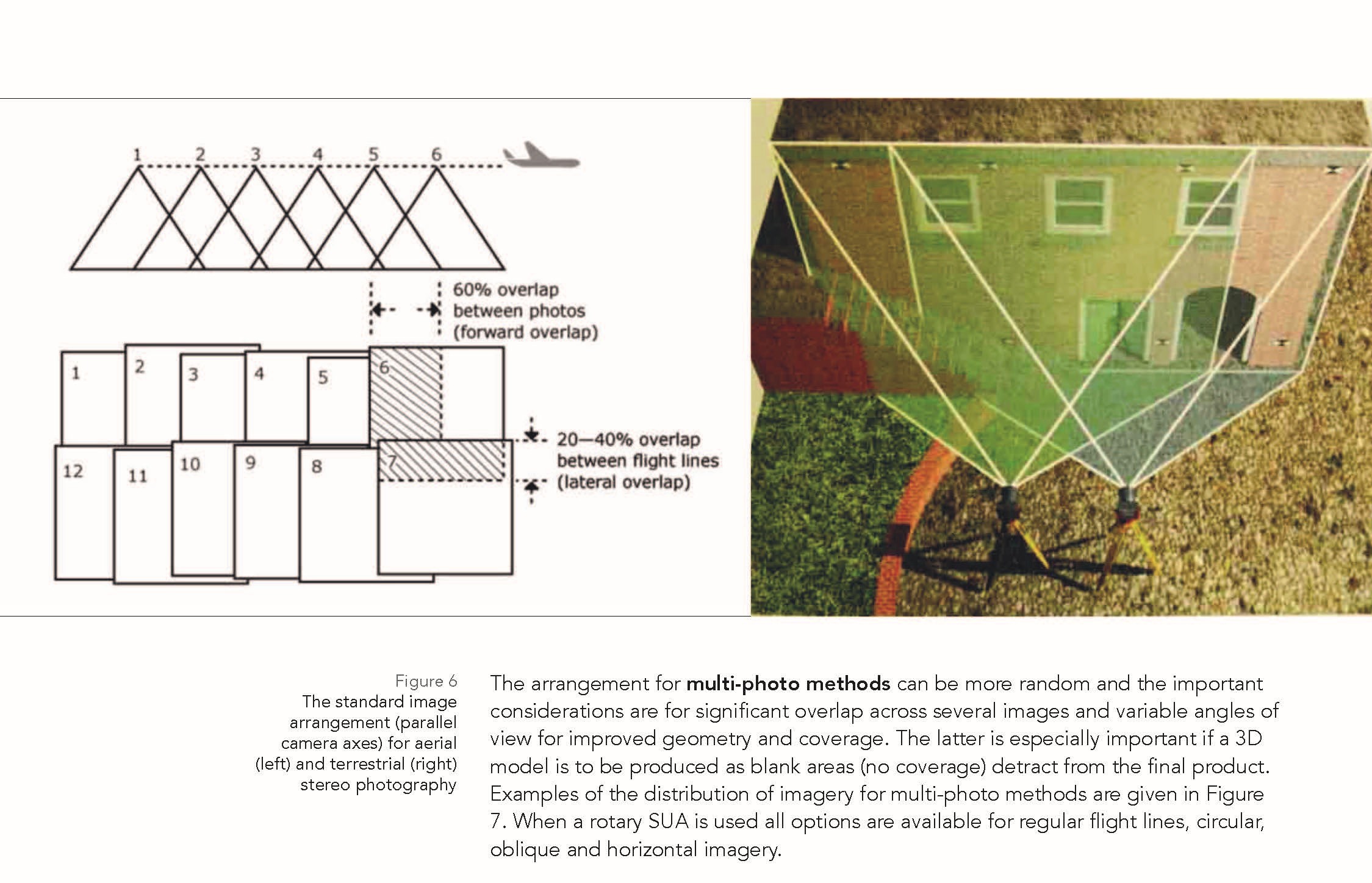
One of the most important requirements in photogrammetry is image overlap. Each digital photo must share a significant amount of common ground with the next, typically 60-80%. If there isn’t enough overlap, gaps can appear in the data, accuracy is reduced and the final model may be unreliable. So, good data capture is just as important as good processing.
Why this matters for clients
Understanding the basics helps you ask the right questions and ensures you get data you can trust.
The process may happen behind the scenes, but the impact is huge. The quality of the final output depends on professional planning, coverage, and control, not just the software used.
Photogrammetry is now more accessible than ever, but producing reliable, accurate survey results still requires professional expertise.
For detailed guidance on workflows, accuracy, and specifying photogrammetry surveys, download the full client guide from The Survey Association website.